The consumer keeps spending, on a thinner cushion
August retail sales jumped 1.2%. Looking at 2026 so far, spending has held up, but more of it is prices and less of it is savings.
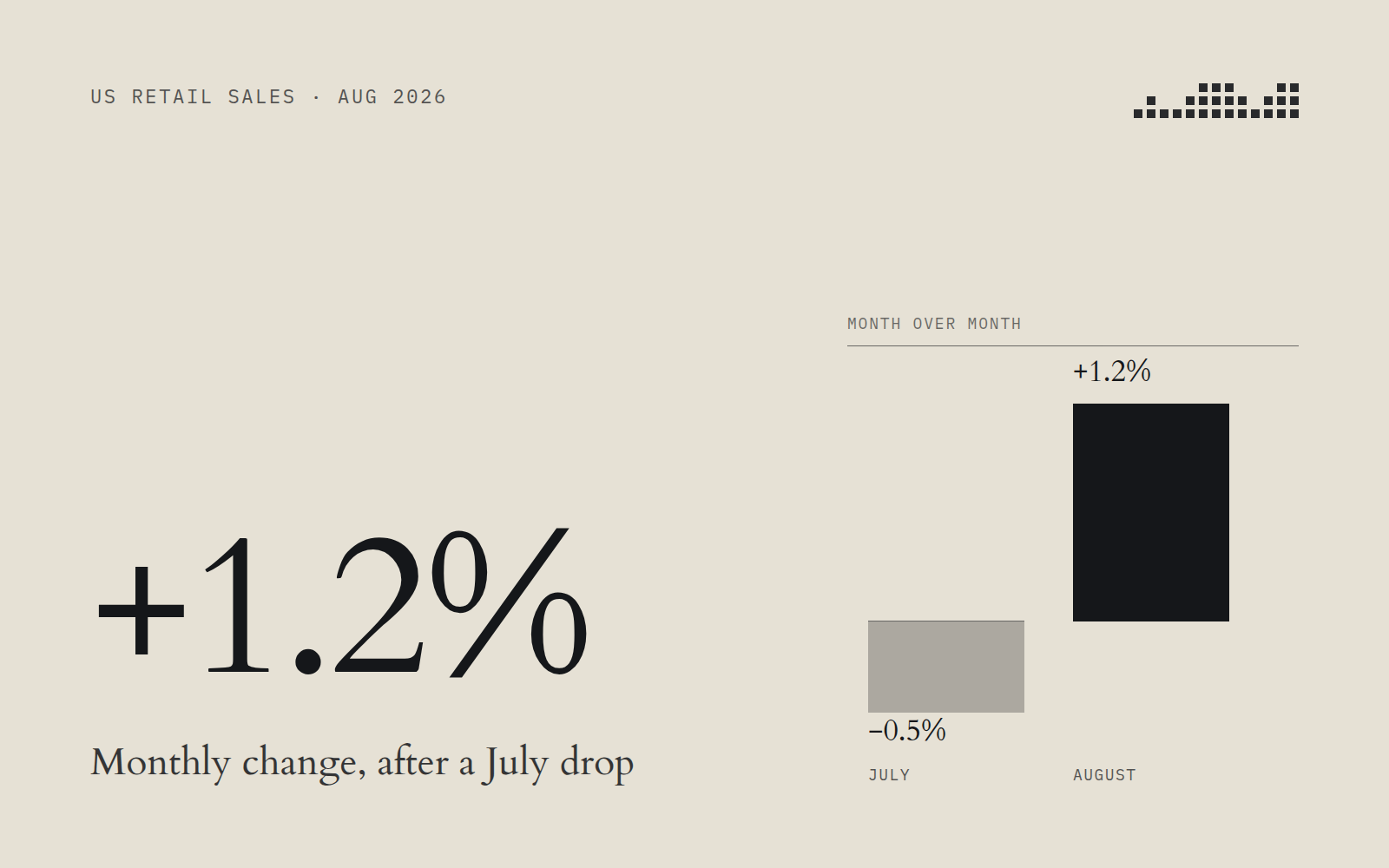
August retail sales rose 1.2%, well above the 0.8% consensus and a sharp turn from July’s 0.5% drop. The control group, which feeds into GDP, jumped 1.4%. Gas stations were up 3.1%, which is mostly just higher pump prices, but spending was broad outside of fuel too: online sales rose 2.6%, electronics 1.6% and restaurants 1.2%. KPMG now sees third-quarter GDP growing around 3.1% annualized.
Looking at 2026 as a whole, the story is less clean. In July, nominal spending rose 0.2% but real spending grew less than 0.1%, so most of the gain was inflation. The personal saving rate is down to 3.0%. Earlier in the year, larger tax refunds and the tax cuts helped, and stock market gains kept wealthier households spending. TD Economics estimates the top 20% of households hold nearly 72% of total wealth, while wage growth for lower-income workers is only barely ahead of inflation.
That’s the classic K shape: restaurants and retailers aimed at higher earners are doing fine, and everyone else is trading down. Strong spending is also exactly what the Fed didn’t want to see. It adds to the case for more hikes, and higher rates hit the bottom half of the K first, through credit cards and auto loans. My read is that the aggregate numbers will stay decent for another quarter or two, but the data to watch is the lower-income consumer, not the headline.
Sources: Axios, KPMG, BEA, TD Economics, Coresight Research.