The BOJ hikes to 1.25%, and the yen falls anyway
Japan's policy rate is at its highest since 1995, but a split vote and a cautious Ueda sent the yen the wrong way.
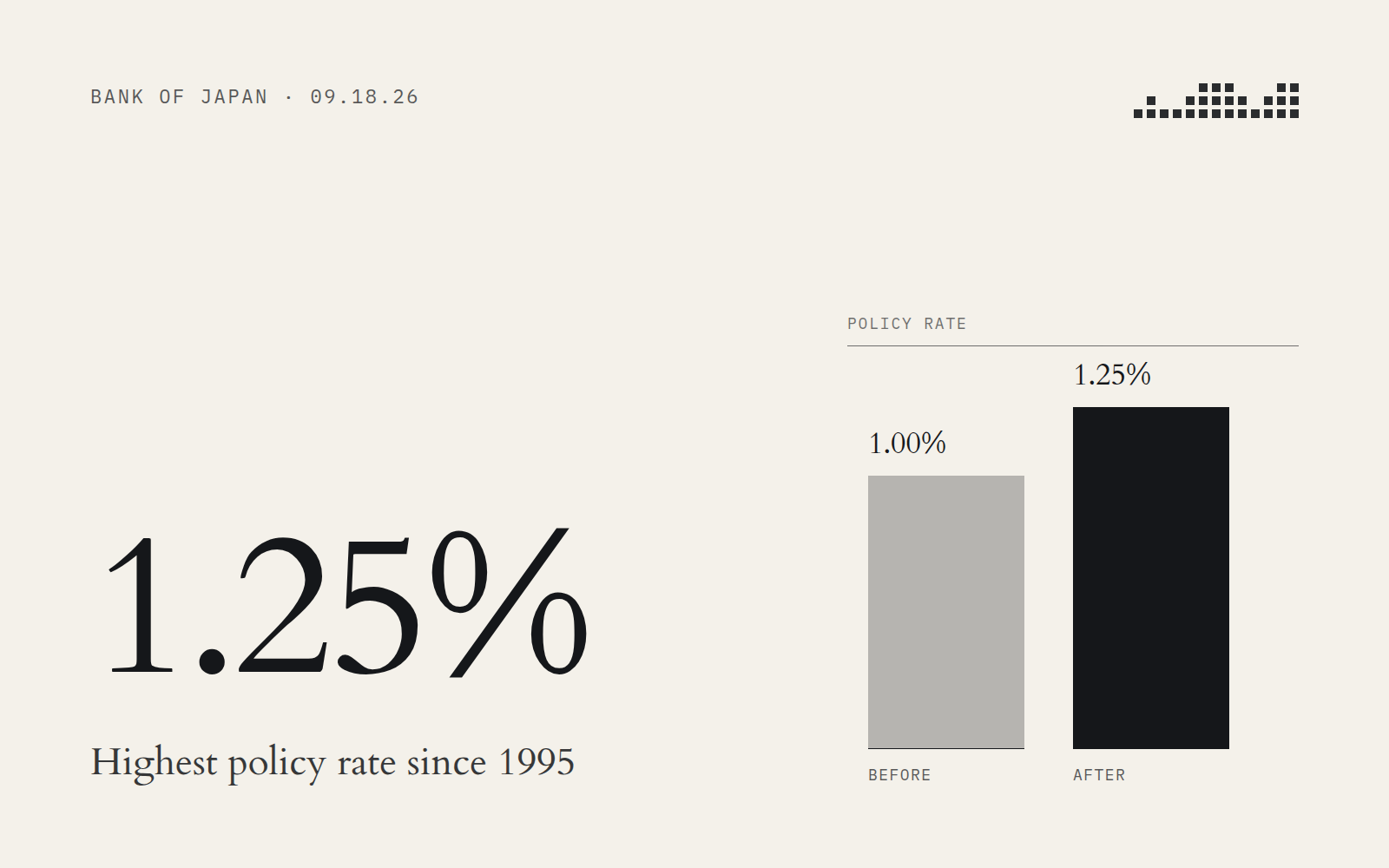
Two days after the Fed, the Bank of Japan raised its policy rate from 1.00% to 1.25% on September 18. That’s the highest level since 1995. The vote was 7 to 2: board members Toichiro Asada and Ayano Sato wanted to hold, with Asada pointing out that core inflation is still under the 2% target. It eased to 1.7% in August from 1.8% in July.
The market reaction is what caught my attention. Normally a rate hike strengthens a currency, but the yen weakened, with USD/JPY moving back above 157. The 10-year JGB yield slipped, and the Nikkei rose 1.5%. The hike was already priced in, so traders focused on the two dissents and on Governor Ueda saying the bank wants to avoid moving too fast. He kept the door open (“We shouldn’t rule anything out”), but the overall message was cautious.
The bigger picture is that the Fed is also hiking, so the gap between US and Japanese rates barely narrowed. That keeps the carry trade attractive and the yen under pressure. The BOJ has cited wage growth and a shrinking labor pool as reasons to keep going, and a Bloomberg survey of BOJ watchers expects the next hike by January. The next checkpoint is the October 29 to 30 meeting, which comes with a new Outlook Report.
Sources: CNBC, Babypips, Bloomberg, Japan Times.