Warsh hikes, and the White House isn't happy
The Fed's first hike since 2023 came from the chair Trump picked to cut. A few thoughts on why, and what the dots say next.
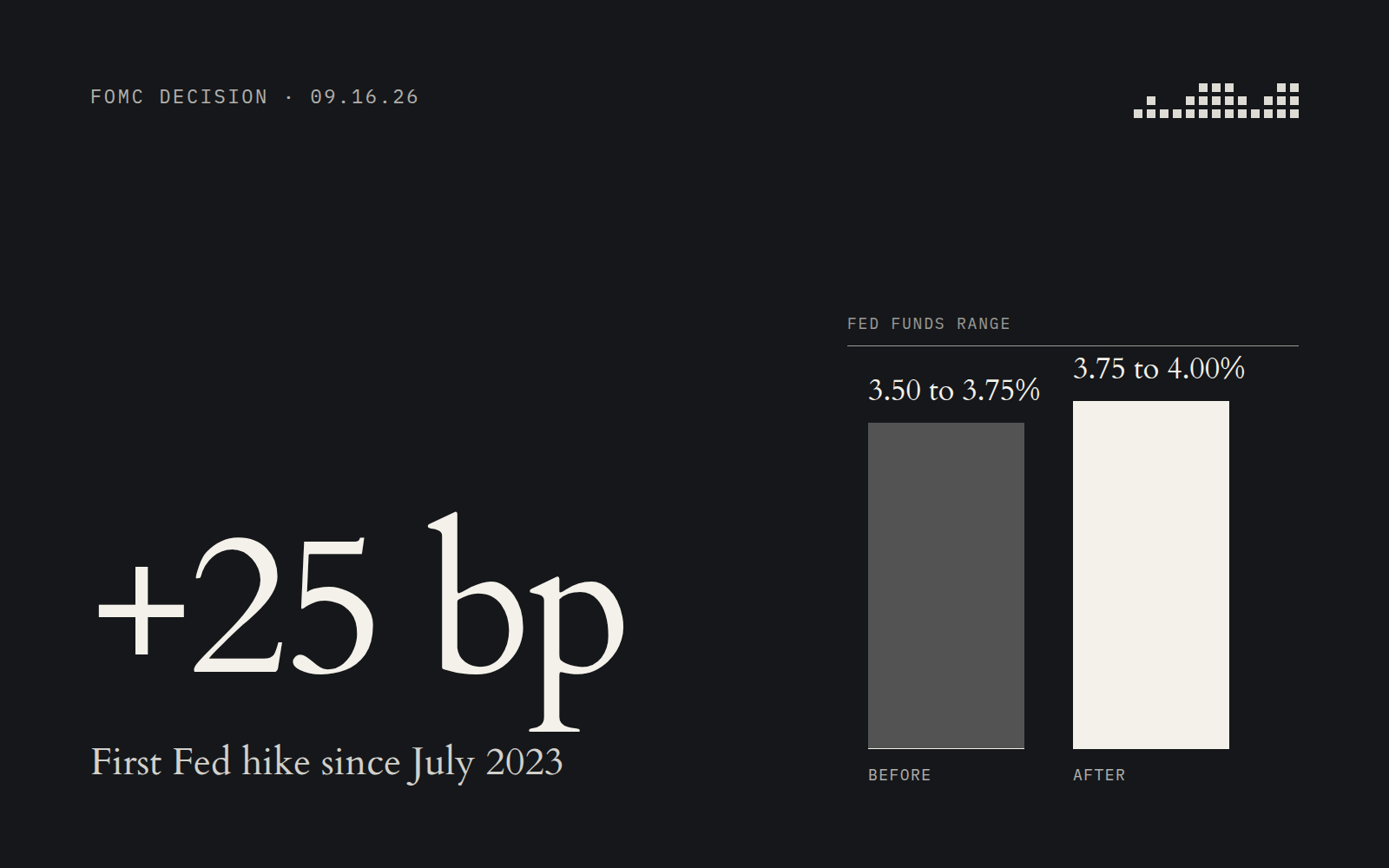
On September 16 the Fed raised rates by a quarter point to a 3.75% to 4.00% range. It was the first hike since July 2023, Kevin Warsh’s first decision as chair, and the vote was 12 to 0. His line at the press conference was blunt: “The plain fact is that inflation is too high, and has been for too long.” The data backs him up. August CPI rose 0.4% on the month and 3.4% on the year, and July PCE was running at 3.7%, with core at 3.3%.
The interesting part is the politics. Trump picked Warsh expecting lower rates, and he still says rates “should be 1%, or less.” After the decision he said he told Warsh “you might as well vote with the board because it’s not going to matter,” called the committee “a bunch of politicians,” and said he still has confidence in Warsh but that “he’s got a very tough board.” That reads to me like Trump leaving himself room to blame the committee instead of his own pick. It also means Warsh has now shown he’ll act against the President’s wishes, which should help the Fed’s credibility with bond investors.
On the macro side, Warsh made the case at Jackson Hole that this isn’t only an oil story. More than half of the goods and services the Fed tracks are rising 3% or more a year, compared with about a third before the pandemic. The median dot now puts the funds rate at 4.1% by year end, and 16 of 18 officials see at least one more hike in 2026. Futures now price about a 75% chance of another move in October, and the 10-year Treasury has pushed above 5.1%. The next thing I’m watching is the September 30 PCE print.
Sources: CNBC, CNN, Chase, Yahoo Finance, PBS NewsHour, Fortune.